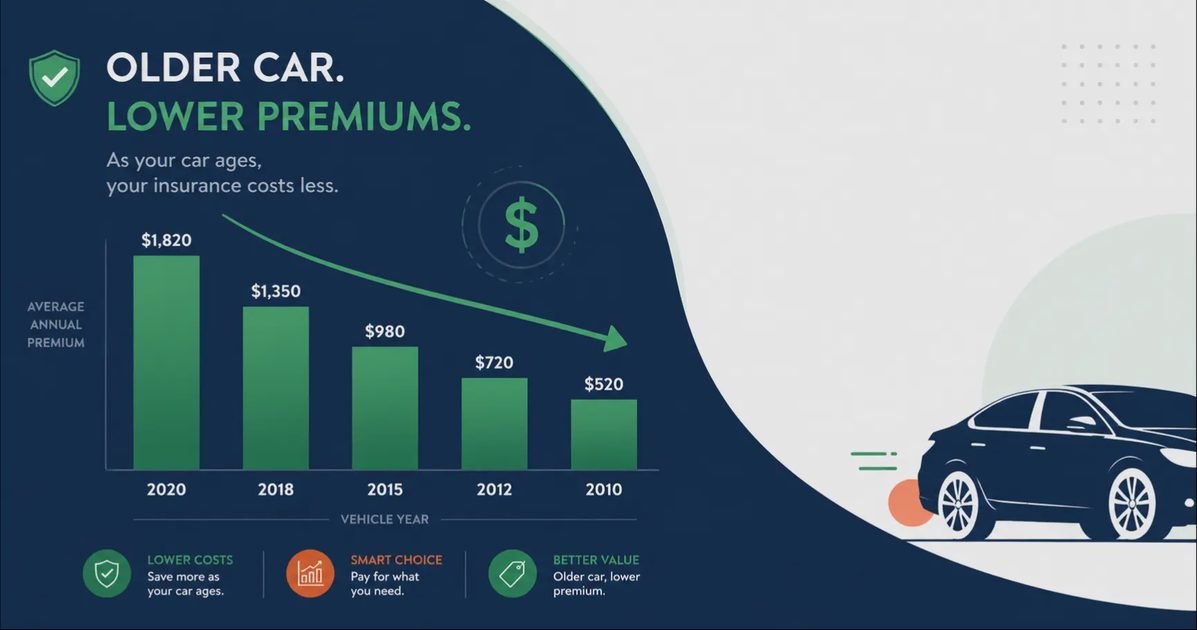
A car worth $4,000, carrying full coverage can mean paying $700 to $1,200 a year to insure a vehicle the insurance company would only pay you $4,000 for — total — if it were stolen tomorrow. Do that math for five years and you've spent more insuring the car than the car is worth.

The older your car gets, the more of your premium is probably paying for coverage you no longer need.
That's a scare tactic? No! It's exactly how actuaries price a policy!
And it's exactly why "how old is your car" quietly does more to move your auto insurance rate than almost any other factor besides your driving record. Most drivers never hear this explained plainly, because nobody at the insurance company is required to tell you when you've crossed the line from "smart to keep full coverage" into "paying for nothing."
A Quick, Real-World Example
Dennis, a 58-year-old warehouse supervisor from Ohio, was still paying $164 a month for full coverage on a 2011 sedan with 148,000 miles on it — a car worth about $2,800 on the open market. He'd kept the same policy for eleven years without ever revisiting it.
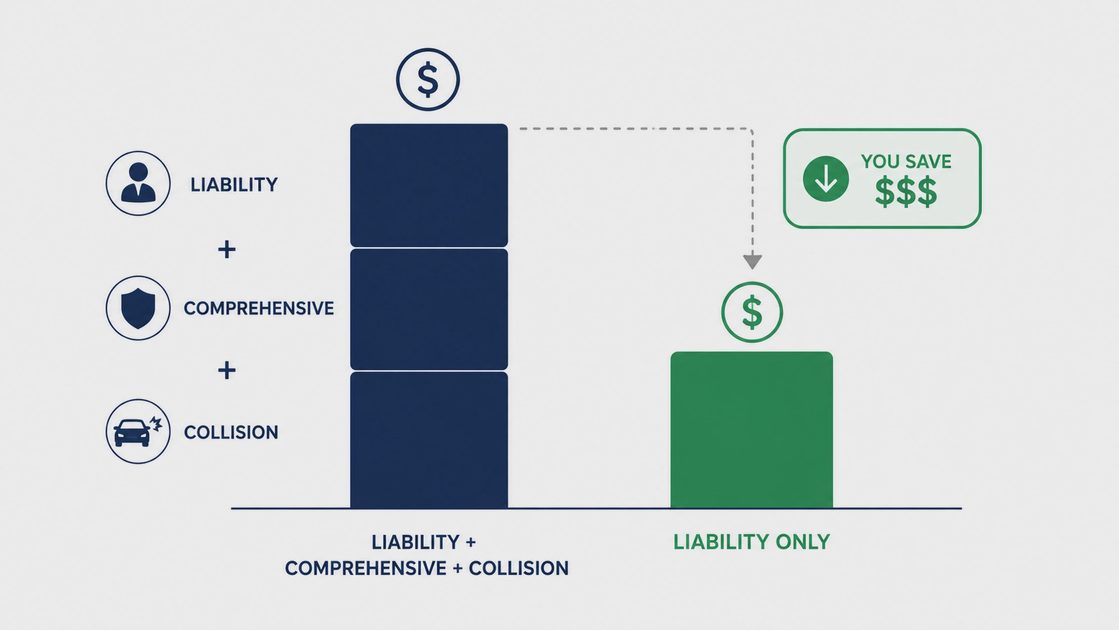
When he finally ran a comparison, he found that dropping comprehensive and collision and switching to a liability-only policy cut his bill to $61 a month. That's $1,236 a year back in his pocket — without changing a single thing about how he drives.
Dennis isn't unusual. He's just one of millions of drivers whose car has quietly aged out of needing the coverage they're still paying for.
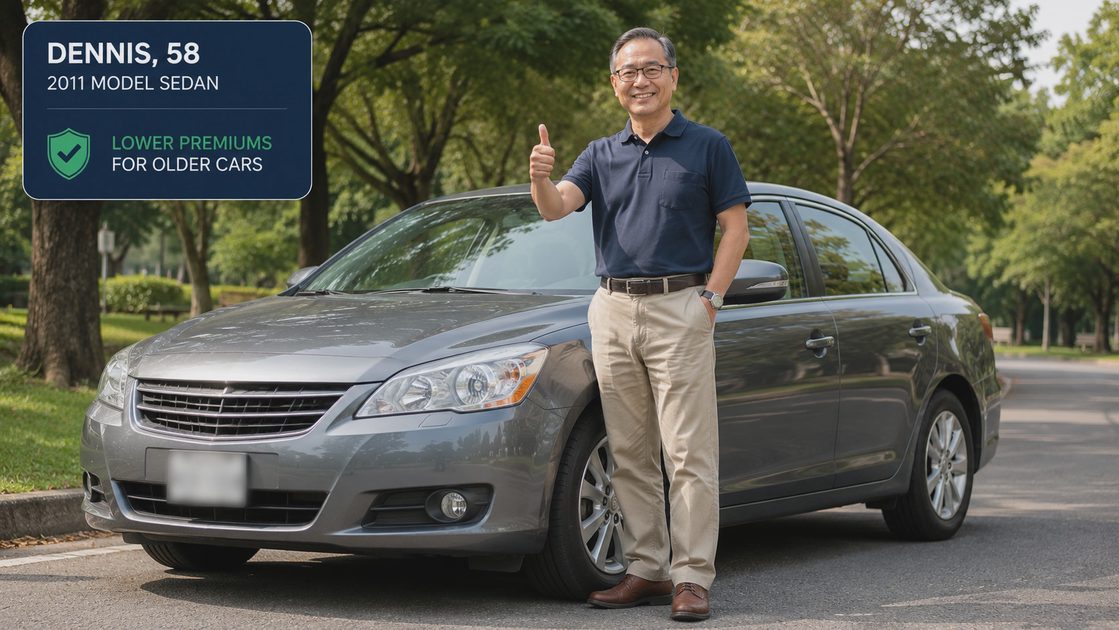
A small act saved Dennis $1,236 in a year.
1. Why Insurance Gets Cheaper as Your Car Gets Older
Car insurance isn't priced off what you paid for the car. It's priced off what the car is worth today — its Actual Cash Value (ACV) — because that's the maximum amount the insurer will ever pay out on a comprehensive or collision claim. As your car depreciates year after year, that maximum payout shrinks, and two things happen:
Comprehensive and collision premiums shrink with it. These are the two coverage types tied directly to your car's value — they cover damage to your own vehicle. As ACV drops, so does the ceiling on what the insurer could ever owe you, and premiums are priced accordingly.
Liability coverage barely moves. Liability pays for damage or injury you cause to other people, and that has nothing to do with your car's price tag. A 15-year-old sedan and a brand-new luxury SUV can carry nearly identical liability premiums for the same driver.
Put those two facts together and you get the pattern: older cars don't get cheaper because insurers are being generous. They get cheaper because less and less of your premium is doing anything useful for you.
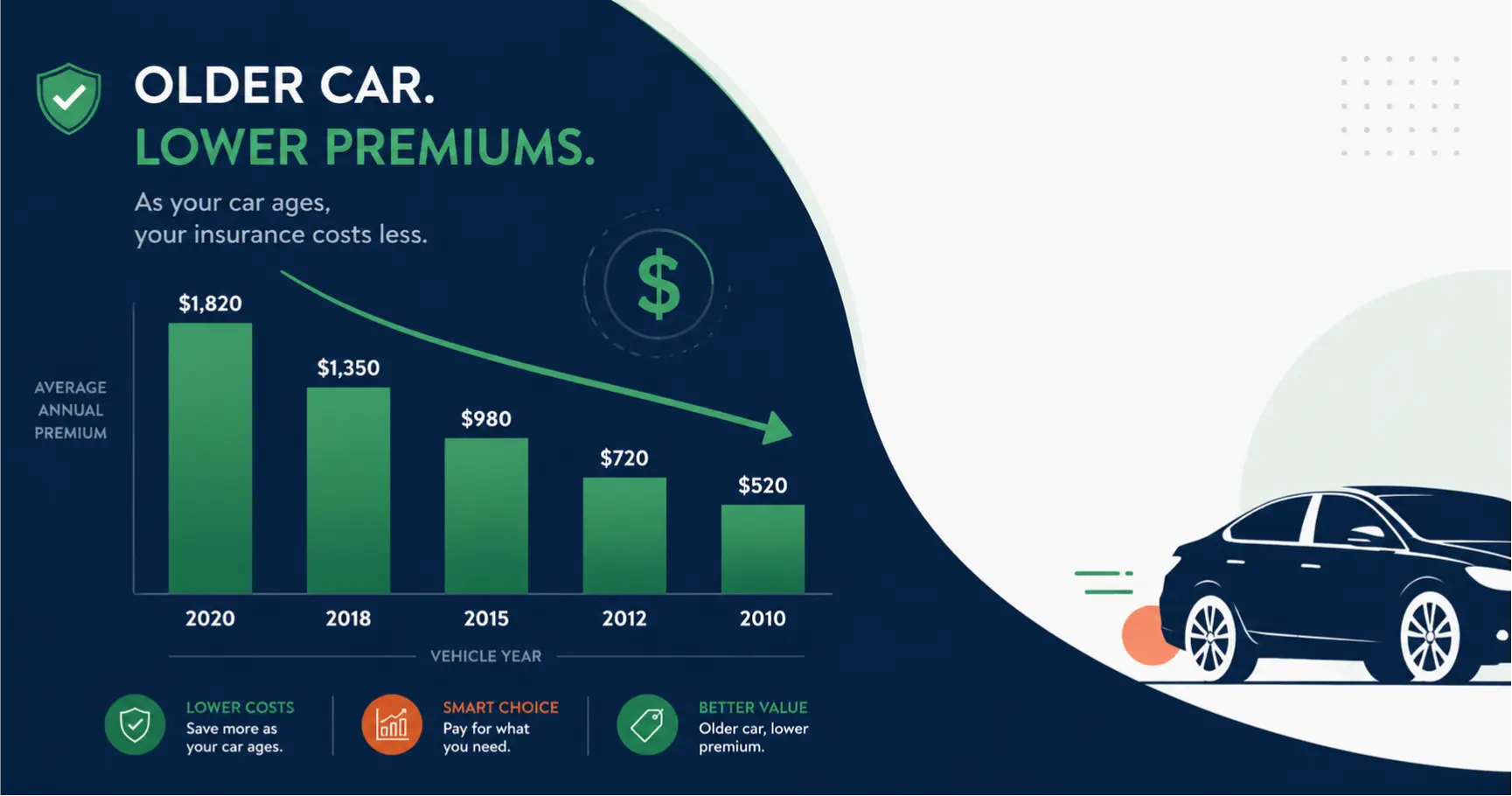
The older your car gets, the more of your premium is probably paying for coverage you no longer need.
2. Full Coverage vs. Liability-Only: What Actually Changes
"Full coverage" isn't one specific product — it's shorthand for a bundle that typically includes liability, comprehensive, and collision. Once a car is paid off, the decision to keep or drop the comprehensive and collision pieces comes down to a simple trade-off:
Coverage Type | What It Covers | Still Worth It on an Older, Paid-Off Car? |
|---|---|---|
Liability | Damage/injury you cause to others | Yes — required in nearly every state, regardless of car age |
Collision | Damage to your car from a crash | Reconsider if payout would barely cover the car's value |
Comprehensive | Theft, weather, animal strikes, vandalism | Often the first to drop on low-value vehicles |
Gap Insurance | Covers the gap between loan balance and car value | Not needed once the loan or lease is paid off |
If your lender required full coverage while you had a loan, that requirement disappears the day the car is paid off. Nobody is required to remind you of that — the policy just automatically renews at the same coverage level, year after year, unless you or your agent proactively changes it.
None of these discounts show up automatically. Carriers don't call you to say "hey, your car's value dropped, want a lower rate?" You typically only see the savings when you actively compare quotes and describe your current vehicle, mileage, and payoff status.
3. The One Exception: When an Older Car Is Actually More Expensive to Insure
Before you assume every old car gets cheaper to insure, there's an important exception worth flagging honestly: not all "old" is created equal.
Classic, antique, and collector vehicles often increase in value over time rather than depreciate, and a standard policy may drastically undervalue them in a total-loss claim. These typically need agreed-value coverage from a specialty carrier, not a standard drop-to-liability approach.
Older performance or luxury models can carry expensive replacement parts even at low market value, which keeps comprehensive and collision premiums higher than the car's price tag would suggest.
High-mileage vehicles with a lapse in coverage history can sometimes see a smaller age-based discount than expected, since a gap in prior coverage is weighed independently of the car's age.

All kinds of factors will affect the final cost of your car insurance.
If any of that sounds like your situation, it's worth comparing a couple of specialty quotes alongside standard ones rather than assuming liability-only is automatically the cheaper path.
4. Check This on Your Own Policy Right away
Pull your current declarations page and find the line-item premium for comprehensive and collision separately from liability.
Look up your car's current private-party value using a standard vehicle valuation tool — not what you paid, what it's worth right now.
Check This on Your Own Policy Right away!
Run the 10% check. If comp + collision costs more than roughly 10% of that value per year, you're in the range where dropping it (or at least comparing options) makes sense.
Confirm the loan is paid off and there's no lienholder requirement still attached to the policy.
Compare quotes from multiple carriers rather than adjusting with your current insurer alone — pricing for older vehicles varies significantly carrier to carrier, and the cheapest option for a new car is rarely the cheapest for an 11-year-old one.
One-click comparison of insurance company quotations
5. Does the Savings Look the Same for Every Vehicle Type?
Not quite. The age-based discount curve is real across the board, but how steep it is depends heavily on what kind of vehicle you're driving. A few patterns worth knowing before you compare:
Sedans and compact cars tend to depreciate fastest in the first decade, which usually means the steepest early drop in comprehensive and collision costs — often the biggest early win for drivers switching to liability-only.
Older SUVs and trucks frequently hold resale value longer than sedans, so the comprehensive and collision premium may stay a bit higher for longer even as the vehicle ages — but replacement part costs can also run higher, which is worth factoring in before dropping coverage.
Older hybrids and early EVs can be a mixed bag: battery replacement costs sometimes keep comprehensive premiums from falling as fast as the car's blue-book value would suggest, even a decade in.
Pickup trucks used as a second or work vehicle often qualify for a lower-mileage profile than a daily commuter car, stacking an extra discount on top of the age-based one.
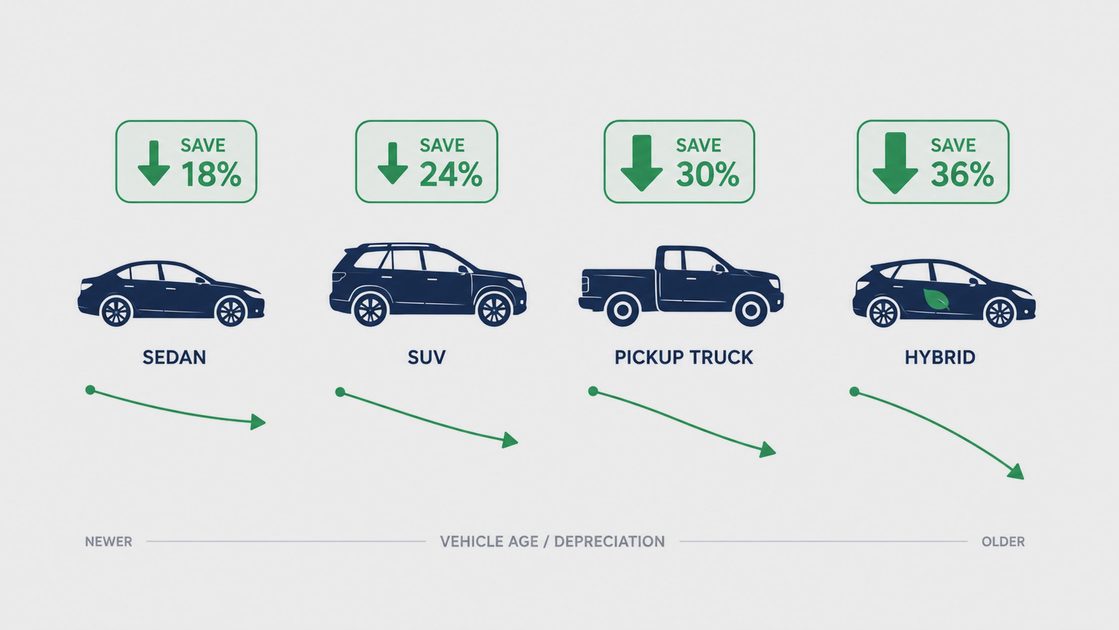
The discounts available will naturally vary depending on the vehicle model.
The only way to know where your specific vehicle lands is to compare actual quotes for your make, model, and year rather than relying on general assumptions about "old cars." A 2013 sedan and a 2013 pickup can land in very different places on the savings curve, even at the identical age and mileage.
Related on Car Costs
Whatever you decide, the one move that costs you nothing is checking.
Insurance carriers price older vehicles very differently from one another — the company that gave you the best rate on a new car is frequently not the one that will give you the best rate now. A two-minute comparison is the only way to know whether your specific car, at its specific age and value, is still matched to the right policy.
This article is for general informational purposes and reflects common industry pricing patterns; it is not personalized insurance, legal, or financial advice. Coverage requirements, discount availability, and pricing vary by state, carrier, and individual driving history. Always confirm your state's minimum liability requirements before changing your coverage level.



No signals yet — transmit the first.