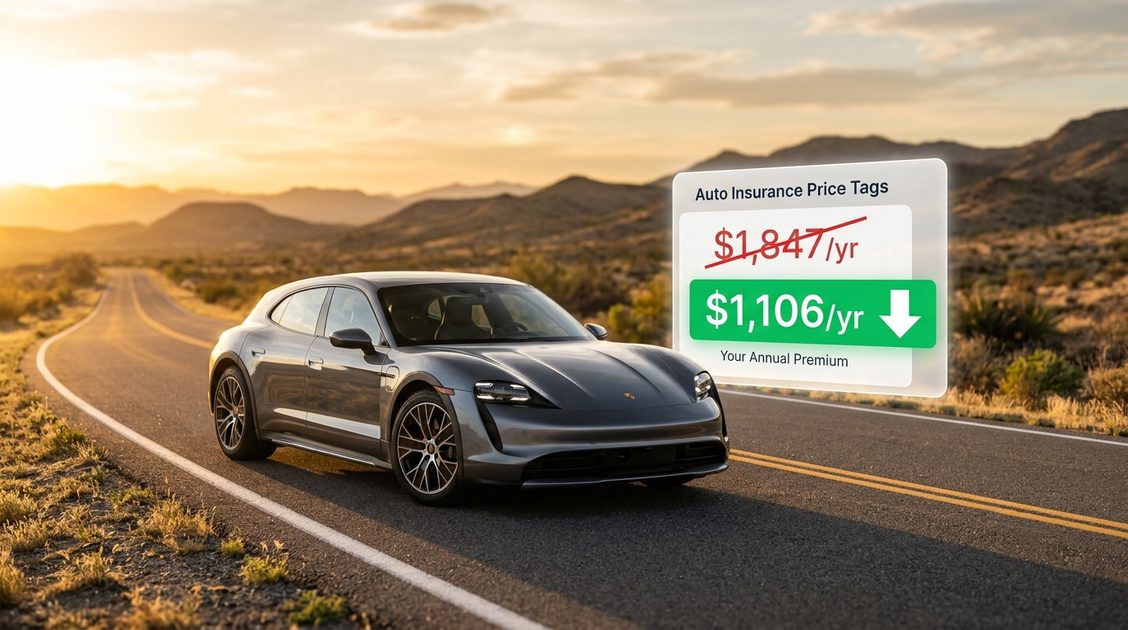
Let's be direct: most drivers are overpaying for car insurance, and they have no idea. They picked a policy two years ago, set up autopay, and moved on. The carrier thanked them by quietly raising rates at each renewal. Meanwhile, a competing insurer sitting in the same market is willing to cover the same car, the same driver, for $50 to $80 less every single month.
That gap — the difference between what you pay today and what the market is actually willing to charge you — is money that belongs in your pocket. The only way to close it is to compare auto insurance quotes from multiple carriers at the same time, every year. Not once in a lifetime. Every year.
Now, let me show you exactly how to do it in under two minutes, what factors drive your rate up or down, and how to get covered today even if you can't pay a large upfront premium.
Why Your Current Rate Is Almost Certainly Too High
Car insurance is a profoundly competitive market, but that competition only works in your favor if you participate in it. Insurers operate on entirely different pricing models — some penalize city ZIP codes heavily, others reward long-term customers, and a handful specialize in specific driver profiles.
The result?
Rates for identical coverage on the same vehicle, in the same city, can differ by $800 or more per year depending on which company you call first.
Compare My Car Insurance Quotes →
There are three main reasons drivers end up overpaying:
1. Loyalty doesn't pay. Most major insurers apply "price optimization" — a practice where they gradually raise renewal rates on customers who are unlikely to shop around. Your loyalty is rewarded with incremental increases, not discounts.
2. Life changes, rates don't adjust automatically. Paid off your car loan? Moved to a safer neighborhood? Hit your mid-twenties or turned 25? Your risk profile dropped, but your insurer won't lower your rate unless you ask — or switch.
3. Bundled discounts you don't actually have. Millions of drivers assume their rate is already optimized. It usually isn't. Real savings come from comparing what's available right now, not from assuming the current carrier did the work for you.
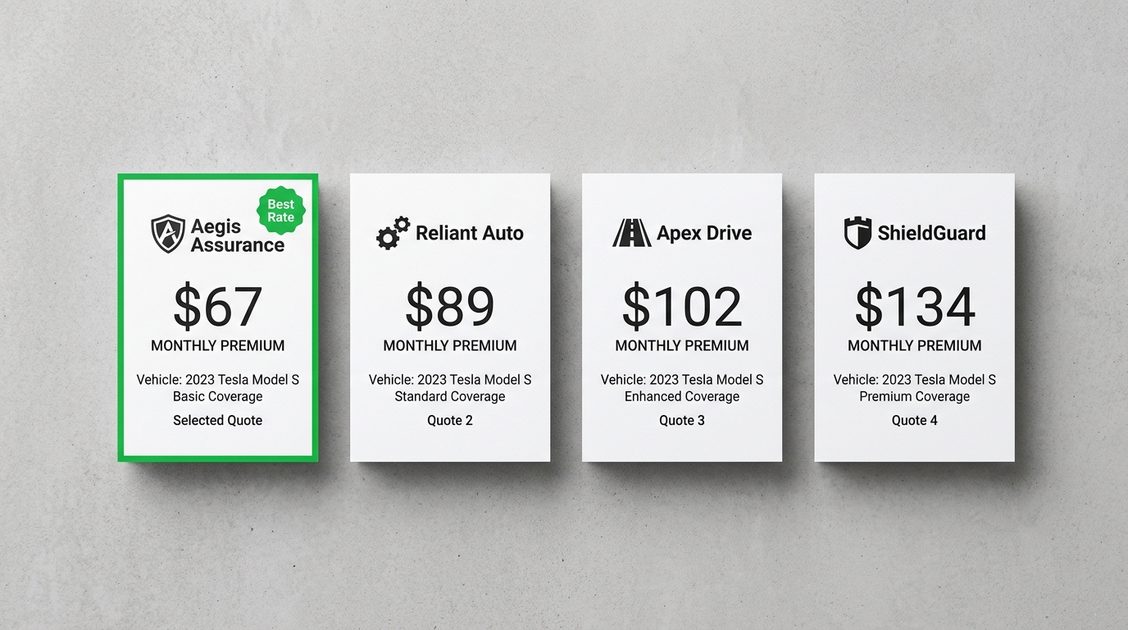
Comparing quotes from multiple carriers side-by-side is the fastest way to find your lowest rate.
How to Compare Car Insurance Rates in Under 2 Minutes
The process is significantly faster than most people expect. Modern comparison tools pull live rates from 20 or more carriers simultaneously — there's no calling agents, no waiting on hold, no filling out the same form twelve times.
1-Enter Your ZIP Code
This is the single most important data point for your rate. Insurance is priced at the ZIP code level, accounting for local accident rates, theft statistics, weather risk, and repair costs in your specific area.
2-Provide Basic Vehicle and Driver Information
Your car's year, make, and model. Your age, driving history, and how many miles you drive annually. Most tools need about 10 fields total — it takes roughly 60 to 90 seconds.
3-Review Real, Competing Quotes Side by Side
You'll see verified rates from multiple top-rated carriers for the exact same coverage. No estimates, no ranges — actual quotes you can act on immediately.
4-Choose and Start Coverage Today
Select the policy that fits your budget and coverage needs. Many carriers offer same-day activation. Monthly payment options are available — no large lump sum required upfront.
What Actually Determines Your Car Insurance Rate
Understanding what moves your rate is the first step to lowering it. Carriers use dozens of variables, but these are the ones that carry the most weight:
Your ZIP Code
Rates can jump by 30% or more within the same city just by crossing into a different ZIP code. Urban areas with high traffic density, accident frequency, or vehicle theft rates command significantly higher premiums. Moving even a few miles can change your rate dramatically — something comparison tools account for automatically.
Your Driving Record
A single at-fault accident typically increases your premium by 25% to 50% for three to five years, depending on the carrier. A DUI can double it. Conversely, a clean record is a leverage point — many insurers offer meaningful safe-driver discounts that you need to actively claim by shopping around.
Your Vehicle
Collision and comprehensive rates are directly tied to your car's value, repair cost, and theft frequency. Sports cars, luxury vehicles, and newer models cost more to insure. Older, lower-value vehicles may not need full coverage at all — a point we'll return to below.
Coverage Level
There's a significant price spread between liability-only coverage (which meets your state's minimum legal requirement) and full coverage (which adds comprehensive and collision for your own vehicle). Choosing the right level for your situation — not the default the carrier suggests — is one of the most direct ways to manage cost.
Credit Score (In Most States)
Most U.S. states allow insurers to use your credit-based insurance score as a rating factor. If your credit has improved since you last shopped for insurance, now is a particularly good time to compare.
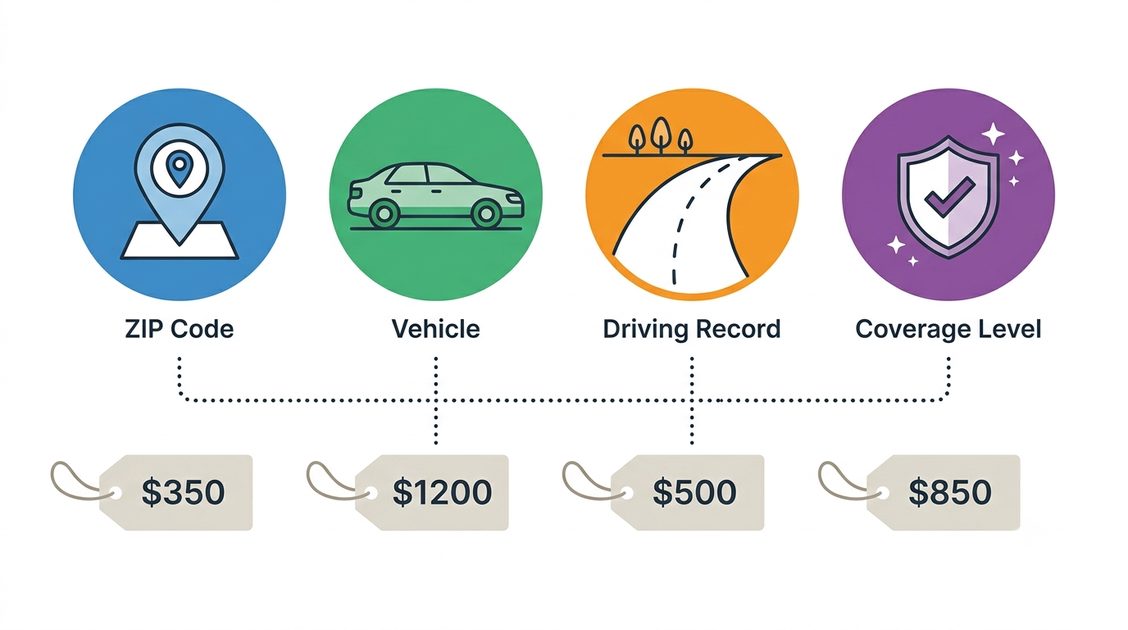
Your ZIP code, driving record, and vehicle type are the three biggest rate drivers — and two of them are under your control.
Compare My Car Insurance Quotes →
Cheap Car Insurance Quotes: What "Affordable" Actually Means
The word "cheap" makes people nervous. It shouldn't — not in this context. When we talk about cheap car insurance quotes, we mean the lowest rate available for a given coverage level, from a financially stable, top-rated carrier. Not stripped-down junk policies from fly-by-night companies.
Key insight: Because carriers use different pricing models, two companies offering identical coverage can have rates that differ by 40% or more. "Cheap" isn't about cutting corners — it's about finding which carrier's algorithm works in your favor for your specific profile.
Coverage Type | Who It's Best For | Avg. Monthly Cost | Key Benefit |
|---|---|---|---|
Liability Only | Owners of older, low-value vehicles | $45 – $85 | Meets state minimum; lowest legal premium |
Full Coverage | New cars, financed/leased vehicles | $110 – $200 | Protects your vehicle against damage & theft |
Full + Extras | Drivers wanting maximum peace of mind | $160 – $280 | Includes roadside, rental reimbursement, gap |
Monthly Pay Plan | Budget-conscious, cash flow sensitive | Same rate + small fee | No large upfront payment required |
The right strategy is to compare quotes at each level. You may find that full coverage from Carrier A costs less than liability-only from Carrier B — not because coverage is compromised, but because Carrier A's actuarial model views your driver profile more favorably.
You can only find this out by comparing.
Compare My Car Insurance Quotes →
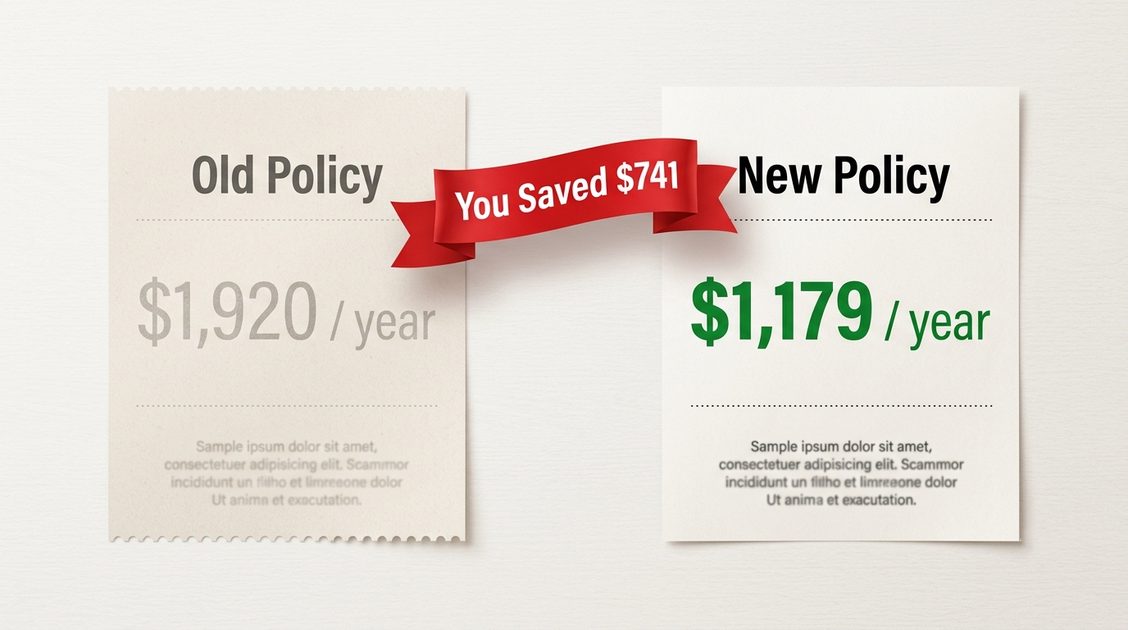
Switching carriers can cut your bill by hundreds without changing a single coverage detail.
No Down Payment Car Insurance: Pay Monthly, Stay Protected
One of the biggest barriers to getting insured — or to switching to a better policy — is the upfront cost. Traditionally, starting a new policy required paying two or three months' premium at signing. For many drivers, that's $300 to $600 out of pocket all at once. It's a real obstacle.
The good news: no down payment car insurance has become widely available. Also called no deposit auto insurance or pay-monthly car insurance, these plans let you activate coverage with only your first month's premium, or in some cases, a reduced first payment. The remaining balance is spread across monthly installments for the policy term.
Compare My Car Insurance Quotes →
How Monthly Payment Plans Work
When you choose a monthly payment plan, your annual premium is divided into installments — typically 10 or 12 payments. Most carriers charge a small installment fee, often $3 to $8 per month, for the convenience. The alternative (paying in full annually) is slightly cheaper overall, but for drivers managing a budget, the trade-off is usually worth it.
Pro tip: Some carriers offer no deposit auto insurance quotes specifically for drivers starting mid-month. You pay for the remaining days in the current period, then transition to a standard monthly billing cycle. It's a legitimate, common option — ask for it when comparing quotes.
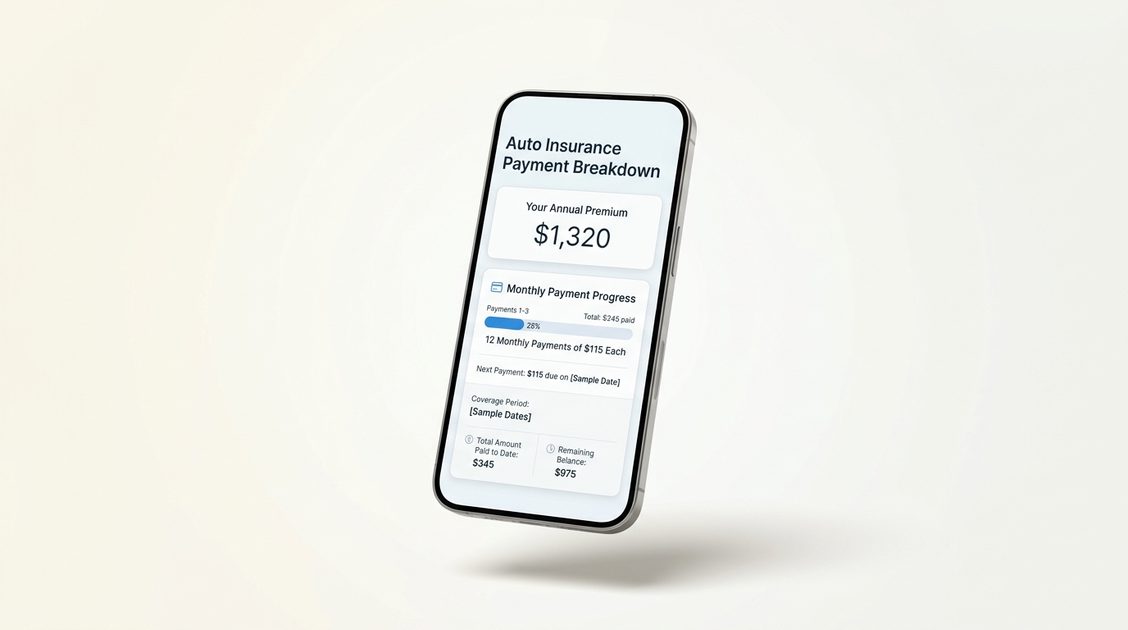
Monthly payment options let you get covered today without a large upfront cost.
7 Proven Ways to Lower Your Car Insurance Quote
Beyond comparing carriers, these are the tactics that consistently move the needle on premium cost:
1. Increase Your Deductible
Raising your comprehensive and collision deductible from $500 to $1,000 can reduce your premium by 15% to 30%. The trade-off: you pay more out of pocket after a covered incident. This works well for drivers with an emergency fund and a clean record.
2. Ask About Every Discount Available
Insurers rarely advertise all their discounts proactively. Common ones that get overlooked: multi-policy discounts (bundling home and auto), good driver discounts, low-mileage discounts, employer or membership affiliation discounts, and anti-theft device credits. Always ask.
3. Reassess Your Coverage on Older Vehicles
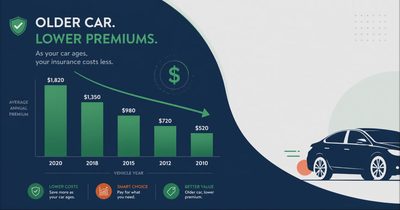
If your car is worth less than $4,000 to $5,000, full coverage may cost more annually than the car's actual value. Dropping collision and comprehensive on an older, paid-off vehicle and carrying liability-only can cut your bill by 40% to 60%.
4. Maintain Continuous Coverage
Lapses in coverage — even brief ones — are a red flag for insurers and almost always result in higher rates when you reinstate. If you're between vehicles or can't afford your current premium, switch to a cheaper policy rather than letting coverage lapse entirely.
5. Drive Less, Pay Less
Many carriers now offer usage-based or low-mileage discounts. If you work from home, take transit regularly, or simply don't drive much, report your actual annual mileage. Drivers under 7,500 miles per year can see meaningful savings.
6. Improve Your Credit Score
In most states, a credit-based insurance score influences your premium. Paying down high balances and resolving any errors on your credit report can shift your score — and your rate — faster than most people expect.
7. Compare Quotes Every Year at Renewal
This is the single most impactful thing you can do. The insurance market reprices constantly. The carrier that was cheapest for you two years ago may not be the cheapest today. Set a reminder 30 days before your renewal date to run a fresh comparison — it takes 90 seconds and can save hundreds.
Instant Car Insurance Quotes: What to Expect
The phrase instant car insurance quotes used to be marketing hyperbole. In 2026, it's genuinely accurate. Comparison tools now connect directly to carriers' real-time rating engines, so the quote you see reflects the actual rate the insurer would charge you today — not a range, not a ballpark, not a "starting from" figure.
Compare My Car Insurance Quotes →
Here's what the process looks like in practice:
Time to complete: 90 seconds to 3 minutes, depending on how thoroughly you fill in optional fields.
Information required: ZIP code, vehicle VIN or year/make/model, driver's license number (not always required upfront), estimated annual mileage, and your birth date. Some tools ask for your current insurer to check for loyalty discounts.
What you'll see: A ranked list of quotes from multiple carriers for your chosen coverage level. Most tools let you adjust coverage types and limits in real time to see how the price changes.
No obligation: Comparing is free and creates no commitment. You can exit without buying and come back later — your quotes are typically saved for 24 to 48 hours.
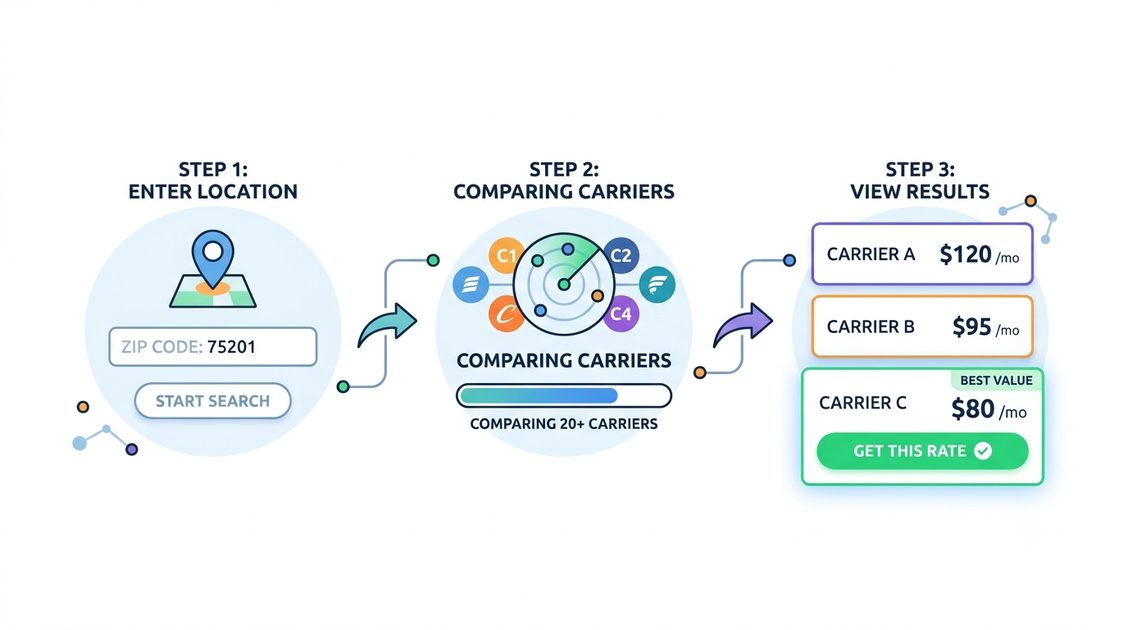
A good comparison tool shows verified rates from competing carriers in a single view — no juggling multiple tabs.



No signals yet — transmit the first.