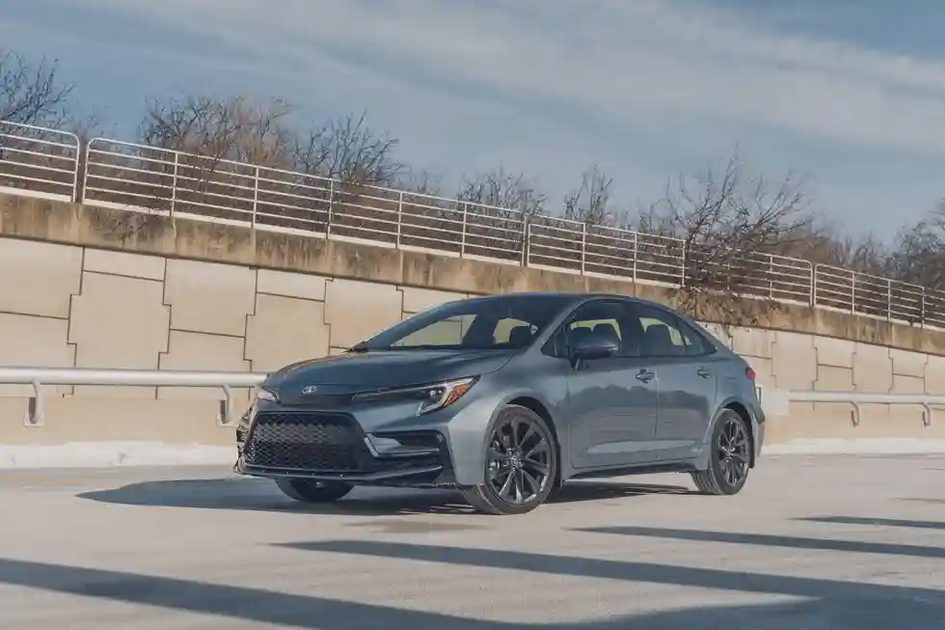
2026 Toyota Corolla Review: Is It Still the Best Daily Driver?
For over half a century, when faced with the question "What's a good car for daily driving?" the Toyota Corolla has consistently been the go-to answer. The 2026 model continues this pragmatic mission with subtle updates in appearance and technology, while its commitment to low operating costs remains unwavering. But in today's landscape where competitors are increasingly refined, can the Corolla still hold its position as the rational default choice?
Driving Experience: Comfort Over Excitement
The 2026 Corolla remains a car that prioritizes comfort over excitement. Its 2.0-liter four-cylinder engine still produces 169 horsepower, paired with a fuel-efficiency-oriented CVT. In stop-and-go traffic, throttle response is smooth and predictable; during highway cruising, the engine recedes into a gentle hum in the background. The suspension absorbs road bumps with composure, making long commutes less fatiguing.
Push it hard through winding mountain roads, and its dynamic limits quickly appear. The CVT whines as it maintains revs under heavy throttle, and the steering lacks communication. But that's not its focus. For daily tasks—commuting, running errands, picking up kids—it delivers exactly what most people need: quiet, comfortable, absolutely predictable driving quality.
Fuel Economy & Reliability: Corolla's Twin Pillars
Fuel efficiency remains the Corolla's brightest spot. The standard 2.0-liter engine achieves EPA-estimated fuel economy of 31 mpg city and 40 mpg highway; the hybrid version jumps to 53 mpg city and 46 mpg highway. With 15,000 miles driven annually, choosing the hybrid could save approximately $500 in gas expenses.
Reliability is equally ingrained in its DNA. RepairPal awards the Corolla a top reliability rating, with average annual repair costs around $400, well below the compact sedan average. Even with long-term ownership, major component failures are extremely rare, and replacement costs for common parts like brakes and shock absorbers remain affordable. The Corolla's promise is simple: start, drive, repeat, year after year.
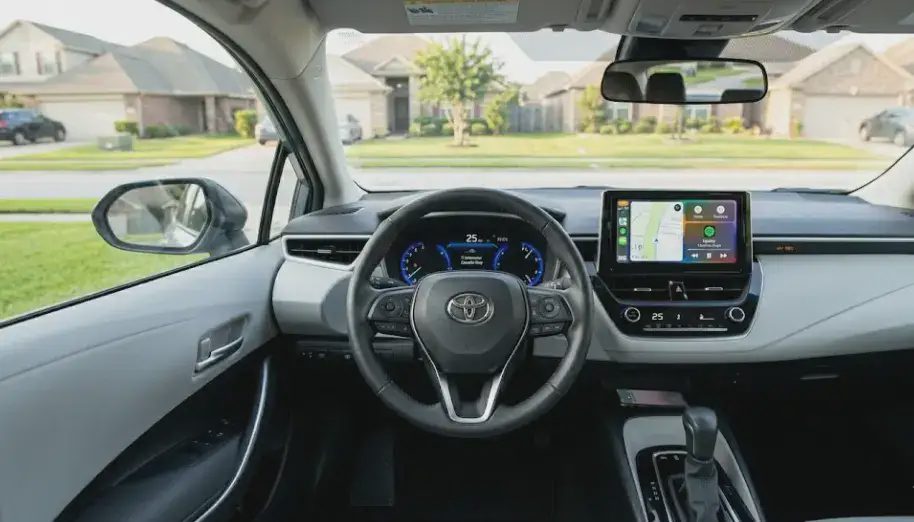
Interior & Space: Familiar, Practical, Unobtrusive
Toyota hasn't redesigned the cabin for the 2026 Corolla, and that's mostly a good thing. Soft-touch materials are used in frequently touched areas, while hard plastics are placed low or out of sight. Front seats provide adequate support for long drives, though taller drivers might wish for more thigh support.
The tech highlight is standard wireless Apple CarPlay and Android Auto, finally eliminating the need for cables. Climate controls remain physical knobs—a silent blessing compared to cars that bury temperature settings in layers of touchscreen menus.
The rear seats can comfortably accommodate two adults for short trips, but six-foot passengers will find legroom tight on longer journeys. The trunk offers 13.1 cubic feet of space, enough for groceries, weekend luggage, or a compact stroller. It's not a cargo champion, but it never complains about daily tasks.
Who Should Buy the 2026 Corolla—Who Should Skip It
For cost-conscious commuters, first-time buyers, or small families who value safety and predictability, the Corolla is an ideal choice. Every 2026 Corolla comes standard with Toyota Safety Sense 3.0, including adaptive cruise control, lane departure warning with steering assist, and automatic emergency braking with pedestrian detection.
If you crave engaging handling, sharp styling, or premium brand prestige, skip it. It won't thrill you on mountain roads or turn heads at the café. But it will make every morning effortless and keep your wallet full. In a world where cars are increasingly expensive and complex, this quiet, honest competence still makes the Corolla one of the best daily drivers on the road.
No signals yet — transmit the first.