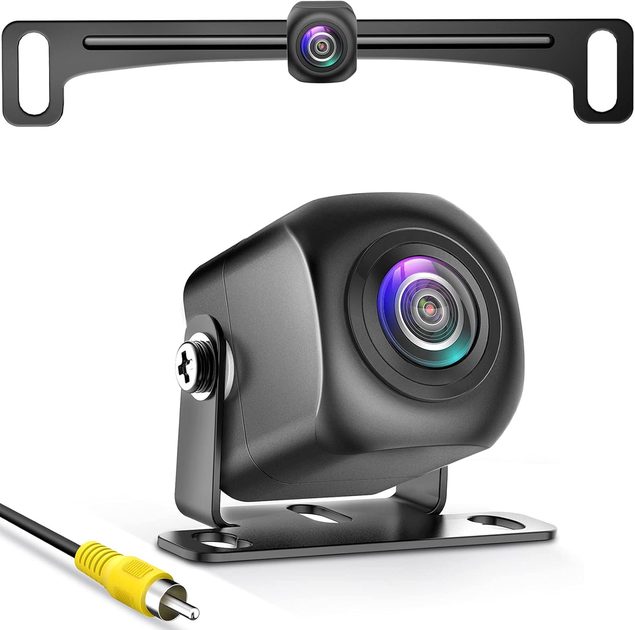
My 2017 SUV was mechanically fine. But the factory backup camera had quietly failed — first softer images, then grainy gray soup at night, and a watercolor mess in the rain. I coped by craning my neck and guessing what was behind me.
Then came a drizzly Friday evening. The screen showed nothing but static. I rolled down the window, leaned out, and inched backward. Thud. The rear bumper clipped a flower bed edge. Minor damage. But the thought that followed hit harder: The neighbor’s kid rides his scooter right there, same time, most evenings.
That wasn’t a close call. That was a warning. I’d been rationalizing a safety problem as an inconvenience for way too long.
So,I stopped shopping by price and started shopping by what actually lasts.
I set a hard checklist: full metal housing, IP69 waterproofing, true 1080P night vision, 170° wide angle, and plug‑and‑play with factory wiring.
Ran that filter. Only one product remained: the PixelMan 1080P Metal Backup Camera.
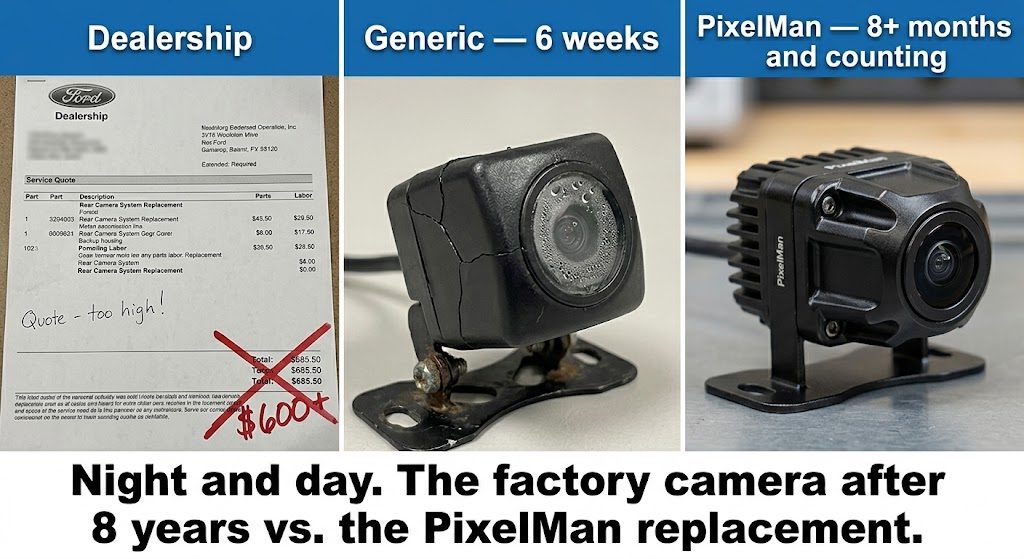
2,800+ real reviews at 4.4 stars. After scrolling through the customer night‑shot photos, it stopped feeling like a risk. It felt like catching up to what everyone else had already figured out.
Why I Landed on the PixelMan 1080P
The PixelMan 1080P Metal Backup Camera checked every single box that actually mattered:
What I Needed | What PixelMan Delivered |
Housing that won't fail | Full metal body — cold to the touch, built like a tool, not a toy |
Real waterproofing | IP69 — rated for pressure washers and steam |
Usable night vision | 1080P sensor with 7 enhanced-IR LEDs, clean signal processing |
Wide field of view | 170° ultra-wide angle — covers blind spots the factory lens never caught |
Fits my SUV | Universal bracket and harness, compatible with most vehicles from 2008 onward |
Proven track record | 4.4 stars across 2,800+ reviews, with actual customer night-shot photos |
That last point mattered more than I expected. Two thousand eight hundred people don't all leave reviews because a product is "fine." They leave reviews because it solved a real problem and held up over time. Scrolling through the customer photos — especially the before-and-after night comparisons — made the decision feel less like a risk and more like catching up to what everyone else had already figured out.
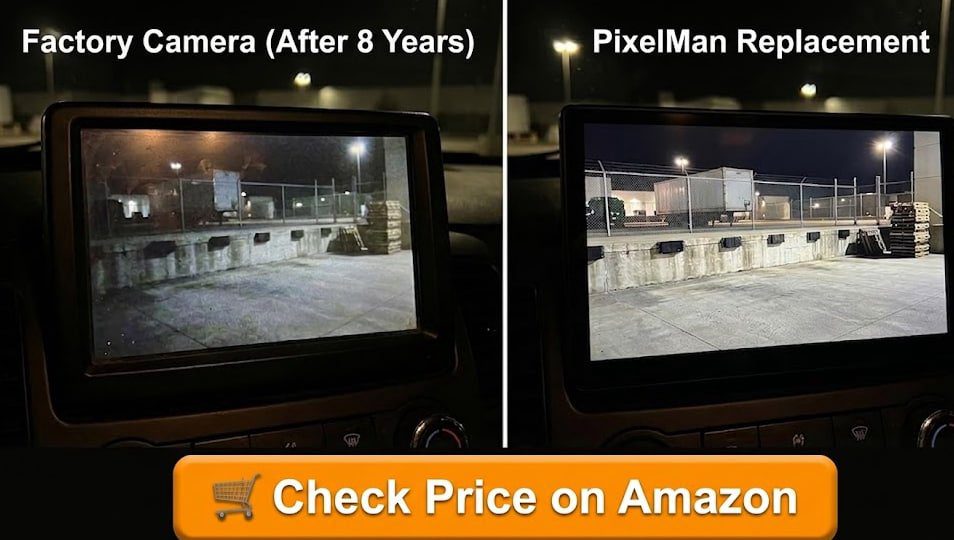
The Installation: 25 Minutes, Basic Tools, Zero Headaches
The box arrived on a Saturday morning. I had mentally blocked off the entire afternoon — I'd been burned by "easy install" claims before.
Here's exactly what happened:
Step1:Removed the license plate frame (4 screws). 3 minutes.
Step2:Unplugged the old camera from the factory wiring harness. 30 seconds.
Step3:Connected the PixelMan harness to the same factory plug — no splicing, no adapters. 2 minutes (mostly spent double-checking it was the right connector, which it was).
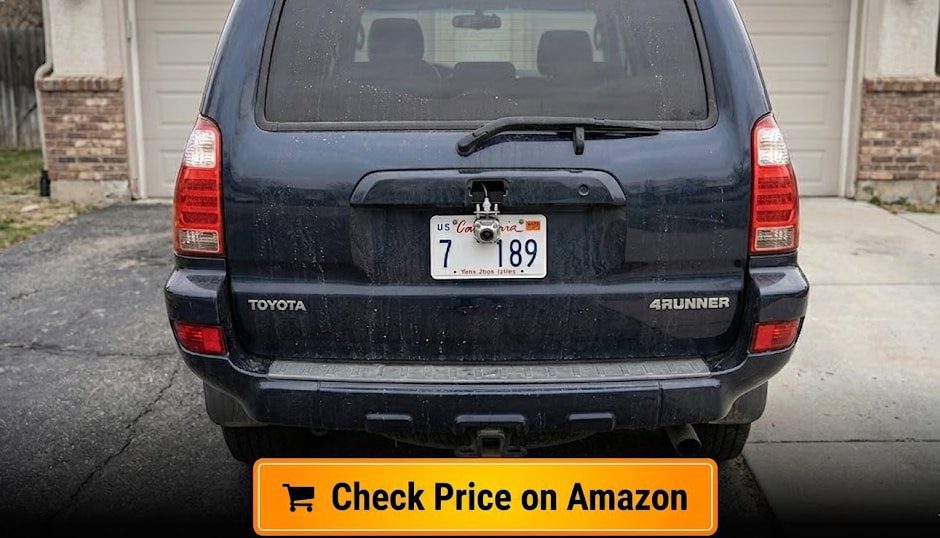
Step4: Mounted the camera bracket to the existing holes above the license plate, secured the metal housing with two bolts. 10 minutes (took my time to get the angle perfect).
Step5: Routed the cable through the existing grommet, reattached the license plate frame, tightened everything down. 10 minutes.
Total time: just under 26 minutes. Tools used: a Phillips screwdriver and a 10mm socket. That's it.
I walked inside, washed my hands, and my wife looked up: "Giving up already?" "Done," I said. She squinted at me. "Done as in... done?" "As in, new camera is in, let's test it when it gets dark."
Her skepticism was earned. I'd spent entire weekends on car projects before. This wasn't one of those.
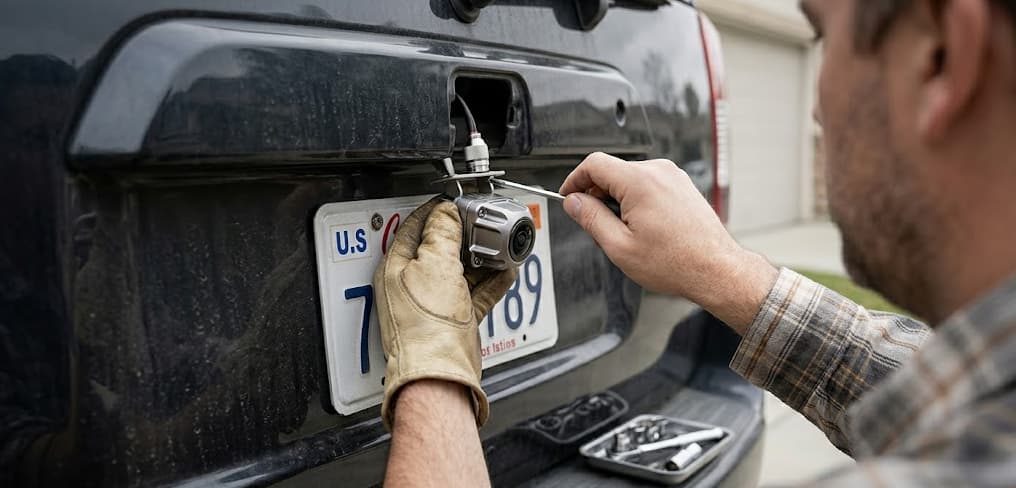
The First Night Test: A Moment of Genuine Surprise
I'll be honest — I set my expectations at "better than the broken one." That bar was on the floor. The old camera could barely distinguish a wall from open space after dark.
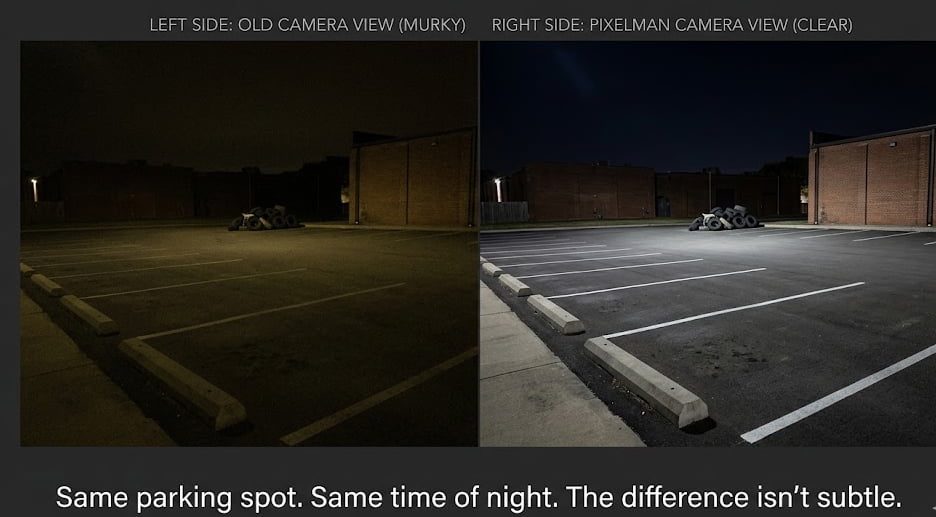
When I shifted into reverse that evening and the screen lit up, I didn't say "better." I said nothing for a good five seconds, because my brain was processing what it was seeing:
The image was sharp. Not "sharp for a backup camera" — sharp, period. Parking lines on the ground were crisp enough to read the faded paint marks. The curb at the edge of the driveway, which the old camera rendered as a vague dark smudge, now had a defined edge and visible texture.
The wide angle was immediately noticeable. The factory camera gave me maybe 120 degrees of rear coverage. The PixelMan's 170-degree lens pulled in the side zones I used to have to check with my mirrors. I could see the corner of the neighbor's fence on one side and the hedge on the other — both at the same time — without a fisheye warping effect that made distances hard to judge.
The night vision was restrained and smart. No blinding white washout. No grainy green-tinted mess. The LEDs provided an even, warm illumination that lit the immediate rear zone — the area where obstacles actually are — without over-brightening the screen. I could see a small flower pot about eight feet behind the bumper, clear as anything.
My wife came out to grab something from the garage, glanced at the screen inside the car, and stopped walking. "Wait — that's the new one? That's clearer than the camera in my sister's 2023 model."
Eight Months Later: What "Reliability" Actually Feels Like
There's a specific kind of peace that comes from no longer thinking about something.
Before the PixelMan, reversing was a mental checklist: Check the screen. Squint. Roll down the window. Lean out. Check the mirror. Is that shadow moving? Go slow. Slower. Okay, probably fine.
Now I shift into reverse, glance at the screen, and back up. That's it. The image is there, every time, with nothing to interpret or squint through. The mental load of "managing the bad camera" has disappeared, and what's left is just... driving.
Here's what eight months of real-world use has thrown at it:
Summer heat: Parked in direct sun, cabin temperatures easily hitting 120°F+. No warping. No image distortion. The metal housing got hot to the touch, but the electronics inside never flinched.
Heavy rain: Multiple downpours, including one storm that flooded part of the street. Drove through road spray that coated the entire rear of the vehicle in grime. The camera lens stayed clear. No internal fogging. No water ingress.
Winter freeze: Sub-freezing mornings where the rear hatch was filmed with ice. Camera powered on instantly. Image was sharp from the first second of reverse.
Car washes: I've taken it through touchless washes with high-pressure jets aimed directly at the rear. The IP69 rating isn't marketing. It's real.
Who This Is For (and Who It's Not)
This camera isn't for everyone. Let me be clear about that.
It's for you if: You drive an older car that's mechanically solid, but whose factory backup camera has aged into uselessness. You're tired of squinting at a grainy screen and guessing what's behind you. You want a one-time fix that doesn't require a second mortgage at the dealership or a series of failed Amazon experiments. You're comfortable with basic tools and 25 minutes of your time.
It's probably not for you if: Your car is under warranty and the dealership will replace the camera for free (take that deal). Or if you're looking for a 360-degree surround system with parking sensors and lane guidance. That's a different product category. This is a direct replacement — just a dramatically better one.
The Bottom Line
There's a quiet dignity in maintaining an older car well. Not because you can't afford a new one, but because you've chosen not to be pushed into a purchase you don't need by a problem that costs a fraction of a car payment to solve.
The PixelMan 1080P Metal Backup Camera isn't exciting. It won't make your car faster or louder or shinier. What it will do is show you what's behind your vehicle — clearly, reliably, in any weather, for years — and let you get back to the part of driving that actually matters: knowing you're not going to hit anything.
And for a 25-minute install and about the price of a tank of gas?
That's not a purchase. That's a declaration that your car still has miles left in it.
No signals yet — transmit the first.